
Mindful Breathing Techniques for Daily Yoga

Today’s chosen theme: Mindful Breathing Techniques for Daily Yoga. Breathe in clarity, breathe out noise. Let this gentle practice guide your routine, deepen your focus, and invite steadiness into every pose and moment.

Why Mindful Breathing Anchors Your Daily Yoga

When your diaphragm moves freely, it massages internal organs and signals the vagus nerve, easing your heart rate. In daily yoga, that physiological calm becomes emotional steadiness, making presence feel natural rather than effortful.

Why Mindful Breathing Anchors Your Daily Yoga

Short, rushed breathing scatters attention. Slow, even breathing gathers it. By extending your exhale slightly, you invite the mind to land, settle, and listen, which makes every daily sequence feel purposefully grounded.

Core Mindful Breathing Techniques for Daily Yoga

Diaphragmatic Breathing (Belly Breath) Basics

Place one hand on your belly, one on your chest. Inhale so the lower hand rises first, keeping the upper hand quiet. Exhale softly through the nose. Notice warmth, space, and calm spreading through your ribs.

Ujjayi Breath Without Strain

Create a gentle, oceanic whisper by slightly narrowing the throat, like fogging a mirror with your mouth closed. Keep the sound smooth, not loud. If effort creeps in, soften your jaw and let the breath lighten.

Nadi Shodhana for Balance

Alternate nostril breathing balances energy and attention. Sit tall, relax the shoulders, and switch sides with a steady count. If one nostril feels tight, keep the visualization and patience—balance grows from consistency, not force.

A 10‑Minute Morning Breath Ritual

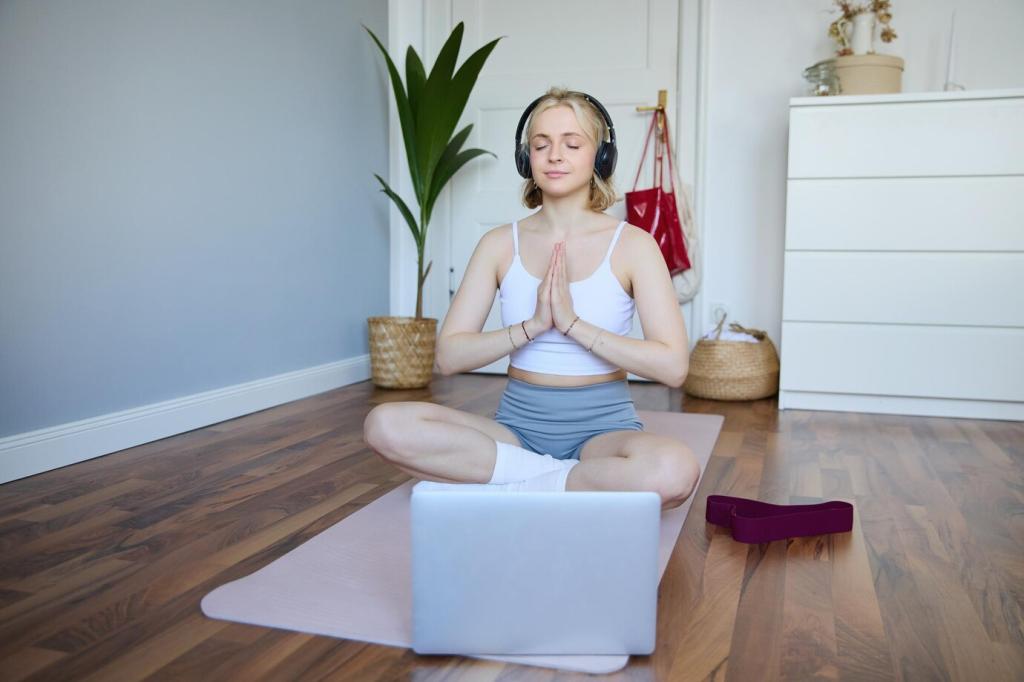
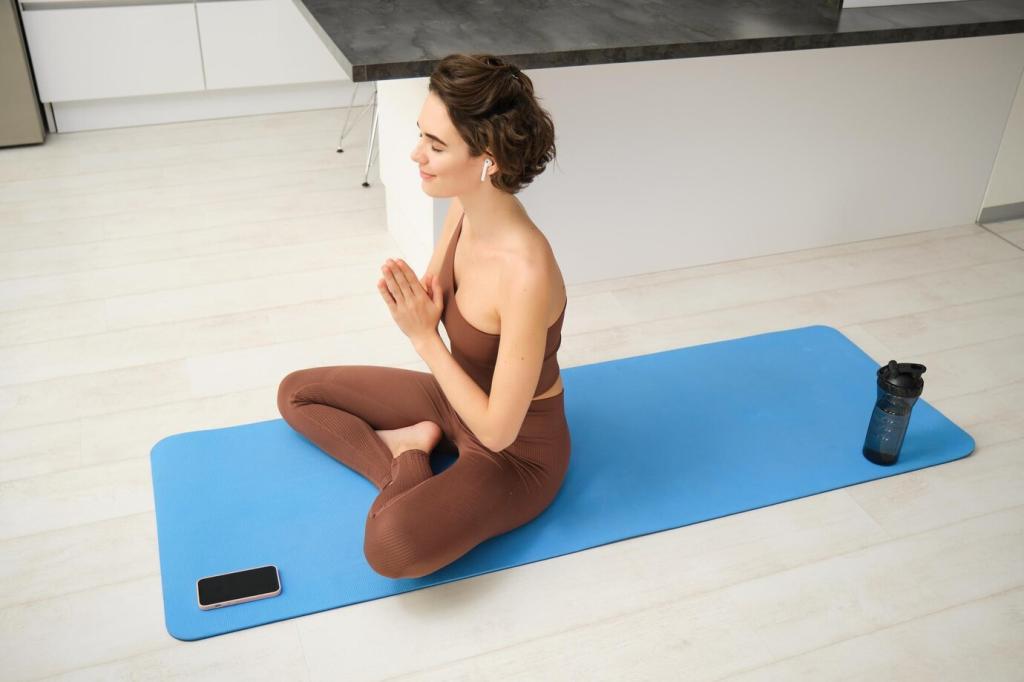
Sit comfortably. Close your eyes. Track the natural flow without changing it. Count your breaths quietly. Notice where the inhale begins and where the exhale ends. Let friendliness, not judgment, guide your awareness.

Midday Reset Breathing for Busy Days

01
Inhale for four, hold for four, exhale for four, hold for four. Keep the shoulders relaxed and the jaw soft. This structured square steadies nerves, quiets rumination, and refreshes mental clarity in just a few cycles.
02
Inhale for four, hold for seven, exhale for eight. The long exhale cues relaxation. Start with three rounds to avoid dizziness. Notice how thoughts slow as the breath lengthens, revealing space to choose your next action.
03
Take a natural inhale, then release a gentle audible sigh. Repeat five times. Let the shoulders drop with each sigh. This quick practice turns agitation into softness, opening a friendlier path back to focused work.

Evening Wind‑Down: Breathing Toward Deep Rest

Rest your torso on pillows, belly soft. Inhale for four, exhale for eight. Let the back ribs broaden. Each breath releases the day’s residue, inviting your body to trust the quiet waiting behind bedtime.

Evening Wind‑Down: Breathing Toward Deep Rest

Gently hum on the exhale, feeling vibration across the face and chest. The sound dampens mental chatter and softens tension around the eyes. Keep it effortless, like a lullaby you hum to yourself kindly.
Stuck in traffic, Maria felt panic rising. She tried slow, even belly breaths and lengthened her exhales. By the next exit, her shoulders softened, and the drive transformed from overwhelm into steady, workable moments.
“Let the breath move you, not the other way around.” That single reminder helped Jamal stop forcing Ujjayi. His daily yoga felt lighter, more honest, and progress arrived quietly—less strain, more sustainable presence.
Studies link slow breathing near six breaths per minute to improved heart rate variability and calmer stress responses. You do not need perfection—only patient, regular practice. Share your observations; your experience is valuable data too.

Troubleshooting: Common Pitfalls and Gentle Fixes

If You Feel Dizzy, You Are Not Failing

Pause, breathe naturally, and sit down if needed. Reduce breath holds and shorten counts. Hydrate and slow the pace. Gentle consistency builds capacity far better than pushing intensity when your body asks for ease.

Drop the Jaw, Drop the Effort

Tension hides in the jaw and throat. For Ujjayi, keep the whisper soft, lips ungripped, and gaze easy. If the sound grows harsh, lighten it until the breath feels smooth, kind, and sustainable.

When the Nose Is Stuffy

Support Nadi Shodhana with visualization when congestion rises. Try steam or a gentle rinse before practice. Keep exhale length easy through the mouth if necessary. Return to nasal breathing once pathways feel open and comfortable.

Habit Stack with Anchors You Already Have

Pair mindful breaths with existing cues: kettle boiling, elevator waiting, or rolling out your mat. Two to five breaths per anchor grows quickly. The more predictable the cue, the more dependable your daily practice becomes.

Tiny Wins: The Two‑Minute Rule

Promise yourself just two minutes of focused breathing. Most days you will naturally continue. On hard days, two minutes still counts. Progress is measured in returning, not in how dramatic any single session feels.

Community Accountability

Tell someone your practice intention, then check in weekly. Comment with your goal and tag a friend to join. A kind witness helps you remember why daily yoga breathing matters, especially on the days motivation flickers.
Primeshconsulting
Privacy Overview

This website uses cookies so that we can provide you with the best user experience possible. Cookie information is stored in your browser and performs functions such as recognising you when you return to our website and helping our team to understand which sections of the website you find most interesting and useful.